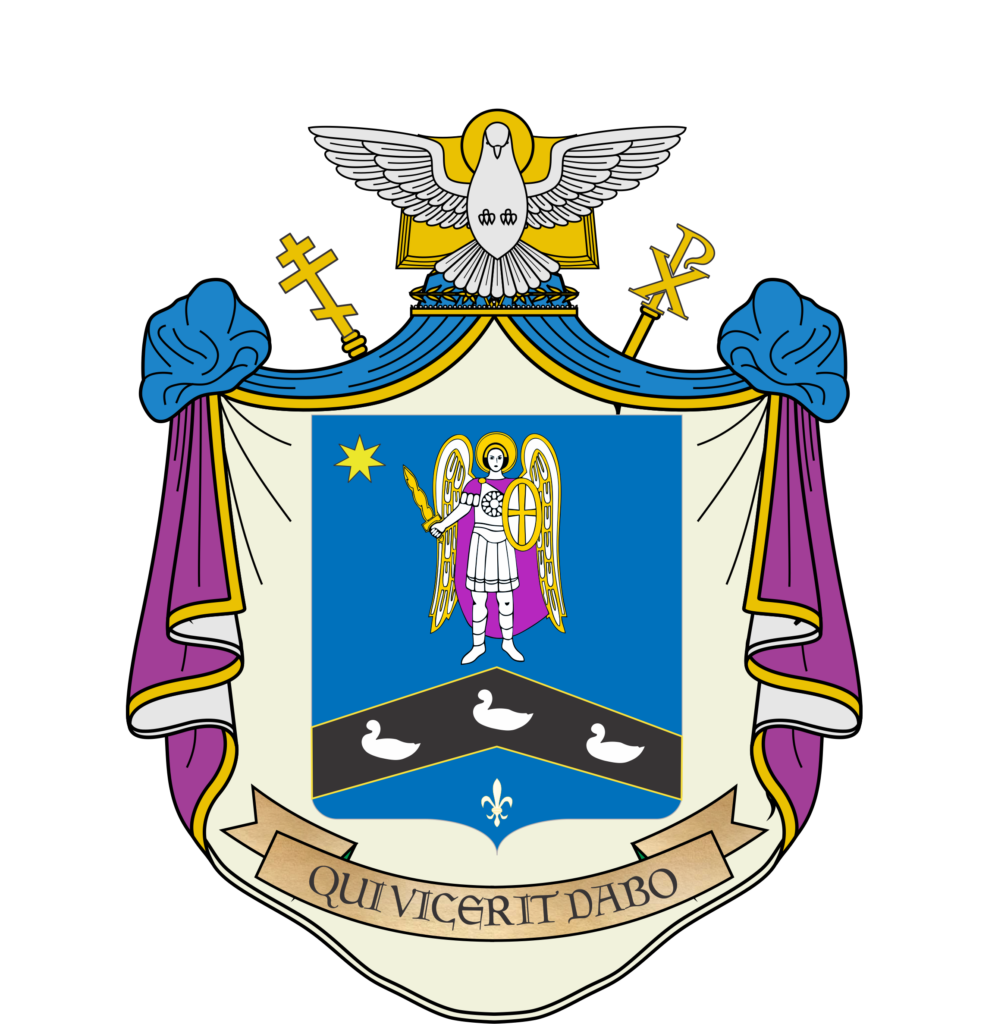
History of the Manor and its Families
Two centuries of life at the end of the rue de l’Hermitage, from the census records, the land registers and the memories of the village.
L’Hermitage, almost never spelled “Ermitage,” first appears in the records of Saint-Mesmin in 1826. Since then, some ten families have lived there: mayors and farmers, a grain merchant, parliamentary staff, and a family that came from far away in the summer of 2024. Here is their story, as the people of the village have pieced it together.
Pierre Gonnord, mayor of Saint-Mesmin
The name of l’Hermitage first appears when its owner, Pierre Gonnord, becomes mayor of the commune.
Jean-Baptiste Avril
The census lists him as a farmer “at the site of this house,” though we do not know whether he owned it.
Pierre Boureau, nephew of a parish captain
Fifty years old, he was born at la Mantruère, in Montournais, fifteen hundred meters from l’Hermitage. He was the nephew of another Pierre Boureau, a parish captain in the War in the Vendée from 1793.
Yacinthe and Hermine Chirac restore the manor
Yacinthe Chirac, forty-five, came from the Haute-Loire and married Hermine Naud, of la Forêt in the Deux-Sèvres. In 1874, the couple restored the manor and gave it the appearance it has kept.
The house then stood empty until 1895, while the adjoining farm was worked by Jean-Baptiste Hay, from 1881 to 1896.
The Bibard family
The Bibards lived here with their five children and two servants. By the census of 1911, no one was living in the house.
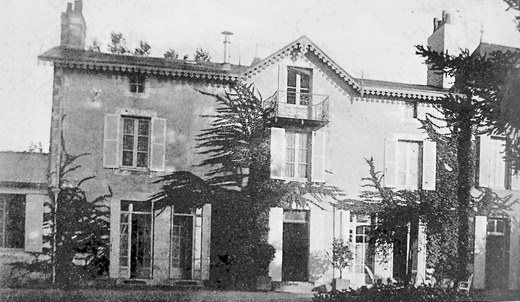
Constant Bousseau, grain merchant
Born in 1885, Constant Bousseau traded in fertilizer and wheat at the Saint-Mesmin station, where he employed twenty to thirty people. He lived in the manor with his wife Marguerite and several servants; during the war, their daughter, married to a Nantes physician, Dr. Giroire, joined them there with their granddaughter Anne-Marie.
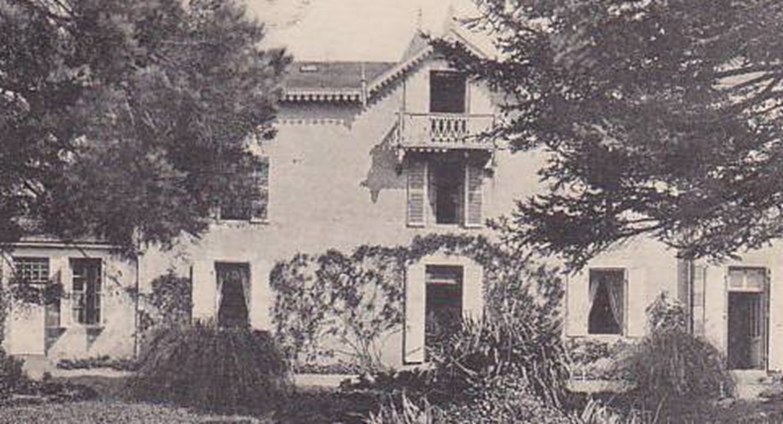
The farm of l’Hermitage and the Cousin family
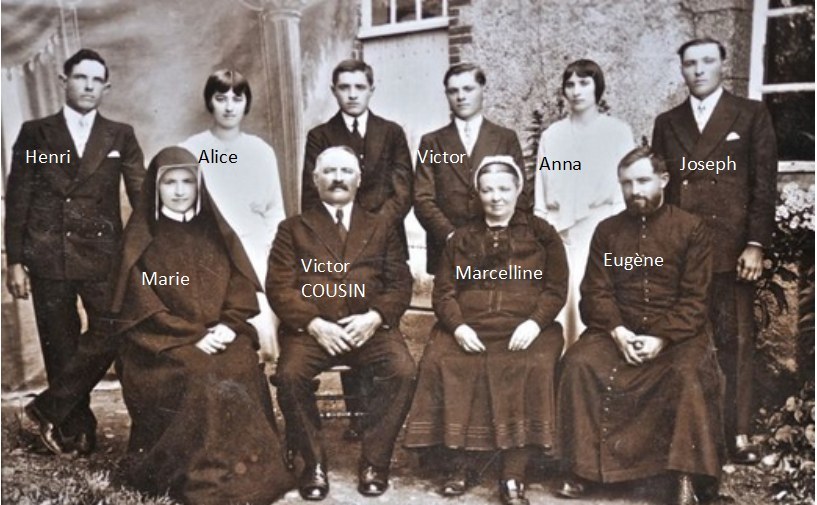
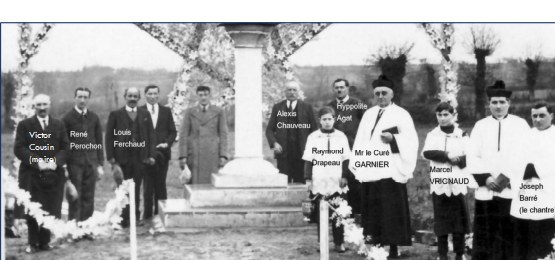
The farm of l’Hermitage was home to the family of Victor Cousin, mayor of Saint-Mesmin from 1920 to 1943, and his eight children, among them a nun and a priest. One of them, Joseph Cousin, gave his name to the nearby sports ground.
Our Lady of l’Hermitage
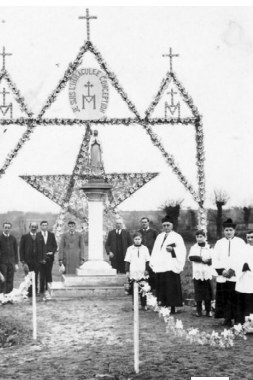
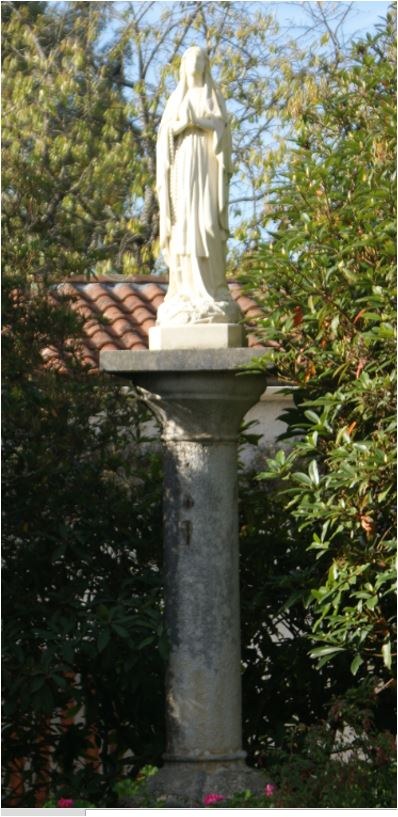
On the return of the parish Mission, after Vespers, the statue of Our Lady of Lourdes was carried in procession by the “Children of Mary” from the church to the grounds of l’Hermitage, at the edge of the village, on land given by Victor Cousin. It stands on a white column of imitation marble made by a neighbor, the cement worker René Perrochon; the parish priest, Fr. Adrien Garnier, generously gave the statue. It still watches over the street.
Georges Simenon, neighbor and friend
The creator of Maigret lived for almost two years on the avenue des Monts, a few steps away. In his recollections, he calls the master of l’Hermitage “the most important figure in the district” (le personnage le plus important du pays): an imposing grain merchant who invited him to dinner. A small circle of friends formed, dining at one another’s houses, often over a game of bridge. See Georges Simenon in Saint-Mesmin.
Françoise’s baptism
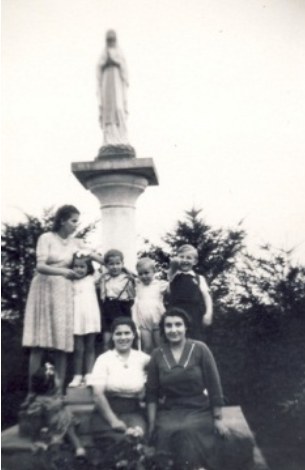
The whole Hay family gathered at the foot of the statue for the baptism of Françoise, who promised herself she would one day come back to live on the rue de l’Hermitage.
The Rouault family
Madame Rouault worked at the Senate and Monsieur Rouault at the National Assembly: for thirty-five years, l’Hermitage was their family home.
Paul and Dolorès Texier
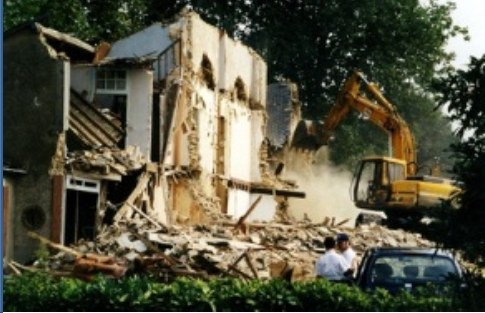
For more than thirty years, they cared for the manor and its park. Given the poor state of the old farm, long home to the Cousin family, then the surgery of Dr. Ériau and the lodging of many tenants, they had it demolished in 2000. Anna Cousin, Victor’s daughter, had been its last resident.
A new family
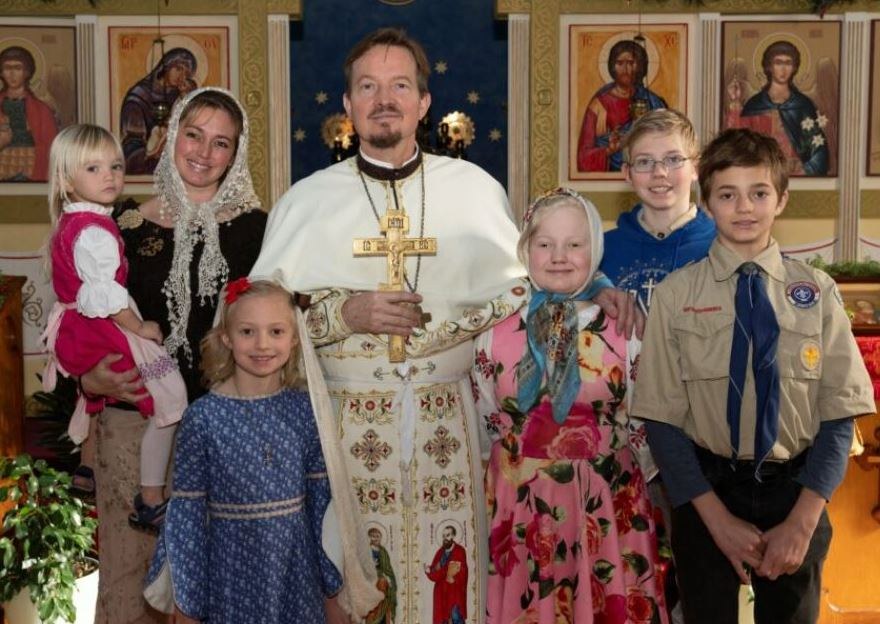
The village welcomed Laurent and Irène Cleenewerck de Kiev and their five children to the manor. A new chapter began, the one this site tells: a family house open to guests, students, scouts and pilgrims.
The rue de l’Hermitage
In the village, they say it is the street that has given Saint-Mesmin the most town councillors: from Louis Guitton, deputy mayor in 1830, to Victor Cousin, mayor from 1920 to 1943, it has counted one to four elected members at almost every election for a hundred and fifty years.
This history draws on the census records and land registers of Saint-Mesmin (nineteenth to twenty-first centuries), the parish register of 1936, and the memories and photographs gathered by the residents of the rue de l’Hermitage, notably Françoise Paillat. Any further details or photographs will be gratefully received.
Did you know l’Hermitage?
Memories, photographs, postcards: we would gladly complete this history with those who knew the house and the street.

